CPG Digital Marketing: How Consumer Brands Win Online
How CPG brands win in digital marketing by uniting data, content, and retail media to drive growth and outperform competitors. See winning brands examples.

CPG digital marketing is now the engine that connects how you build demand in the feed with how that demand converts at the shelf.
What used to be a retail-first world has flipped: digital is where momentum starts, retail is where it lands, and your real advantage comes from how tightly those two sides reinforce each other.
You can see this shift in how budgets are moving. CPG brands now allocate 25–30% of their digital ad budgets to commerce-driven channels like retail media. This reflects how directly digital activity influences purchase decisions.
Today’s winning brands run an integrated system where data, creative, and retail media work together to generate demand and capture intent.
Instead of treating digital marketing as just another channel, they treat it as the operating system for modern growth, a model that compounds into margin, velocity, and scale.
In this blog, we’ll cover:
- What CPG digital marketing actually means and how modern consumer brands use it
- Why CPG marketing operates differently from most industries
- The biggest digital marketing challenges CPG brands face today
- How successful consumer brands connect retail, data, and digital into one system
- The core marketing strategies driving CPG growth
- The key KPIs that define whether your CPG digital strategy is truly working
P.S. Finding it difficult to drive both brand awareness and repeat purchases in crowded CPG categories? At 9AM, we design omnichannel marketing systems that turn discovery into real sales across retail, marketplaces, and DTC. Book a free strategy call now!
TL;DR
- CPG digital marketing connects data-driven media, retail signals, and creative to drive sales across both digital and physical channels.
- Brands must fight commoditization, private-label pressure, margin compression, and fragmented shopper journeys.
- Winning companies unify retail and digital into one operating system powered by shared data, AI tools, and tight financial controls.
- Retail media, omnichannel strategy, DTC infrastructure, influencer and social commerce are part of the new playbook for effective digital marketing.
- Real success is measured through profitability and incrementality metrics such as ROAS, blended CAC, contribution margin, repeat rate, and sales velocity.
What Is CPG Digital Marketing?
CPG digital marketing uses data‑driven media, creative, and retail signals to generate demand and accelerate sales for consumer packaged goods across digital and physical channels.
Today, it spans every moment where consumers discover, compare, and buy. They link brand building, shopper activation, and retail performance into one connected system.
When executed well, it stops being a collection of ads and promotions and becomes a single engine designed to drive demand and sales together.
CPG Digital Marketing Examples
To see how CPG digital marketing works in practice, here are two campaigns where we helped consumer brands use creators and digital platforms to drive awareness, engagement, and retail demand.
1. Icelandic Provisions
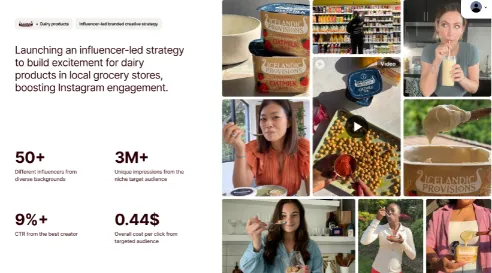
We tapped into influencer partnerships to spark real excitement for Icelandic Provisions’ dairy lineup in local grocery stores. Our team activated 50+ creators across diverse communities and delivered over 3 million targeted impressions. The top-performing creators drove a standout 9% click-through rate. This result shows how creator-led demand can translate into real retail momentum.
2. Nuun
For Nuun, a Nestlé brand, we shifted the strategy from a traditional performance playbook to a creator-led go-to-market approach. We activated 50+ creators, expanded campaign investment by over 60%, and increased engagement metrics by more than 30%. The campaign demonstrates how creator-driven acquisition can accelerate brand growth in competitive CPG categories.
Why CPG Marketing Operates Differently
CPG marketing operates under a different set of conditions because brands sell high-volume products through retail channels they do not fully control. Success depends on repeat purchases, shelf visibility, and retailer partnerships rather than one-time conversions.
1. Repeat Purchase Cycles
Products get used up quickly, which creates constant repurchase opportunities. As a result, marketing focuses on habit‑building, reminders, and loyalty instead of single transactions.
Digital touchpoints, such as paid search, retail media, email, and loyalty apps, reinforce familiarity between purchase moments and reduce the likelihood of switching.
Private label intensifies this pressure. Retailers mostly price their own brands 20–30% lower and promote them aggressively. Private‑label now captures anywhere from 19% to over 40% of category share. So, you need to justify every premium with better quality, stronger storytelling, or a meaningfully different experience.
2. Retail Channel Dependency
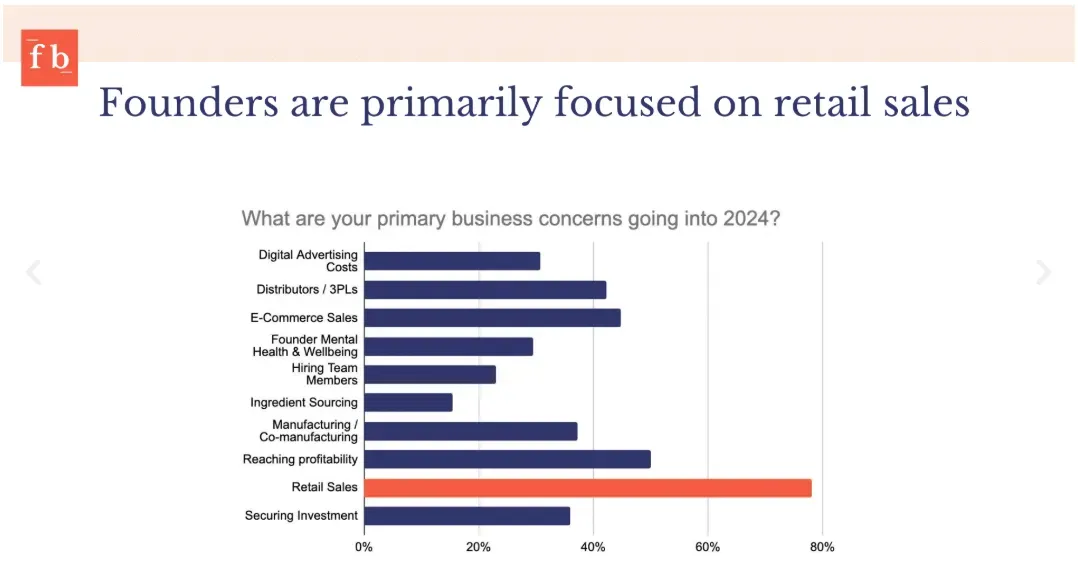
Almost 80% of CPG sales still run through big retailers. This reliance limits pricing flexibility and forces you to compete for shelf space, promotions, and retailer support.
3. Limited Consumer Visibility
Because retailers sit between brands and buyers, you rarely see the full picture of who’s purchasing, why, or how often. You rely on syndicated data and category trends instead of rich first‑party insights. Compared to DTC brands, personalization is harder, slower, and more expensive.
Key Challenges in Modern CPG Digital Marketing
Many CPG brands understand the opportunity in digital marketing. The challenge is execution. Below, we have shared some most common obstacles CPG teams face when they try to scale demand and sales online.
1. Differentiation in Commodity Categories
Differences between CPG brands are usually small, particularly for everyday products like sugar, cleaners, or basic pantry items. On Amazon and other e-commerce sites, shoppers skim and default to price or private label unless something breaks the pattern.
Additionally, look-alike products and generic ads get buried by algorithms. As a result, Customer Acquisition Costs (CAC) increase because brands compete for the same attention with nearly identical messaging.
In our experience working with CPG teams, product features rarely create real separation on their own. Lifestyle framing, recipe ideas, bundles, or community-driven content usually perform better because they show how the product fits into everyday routines.
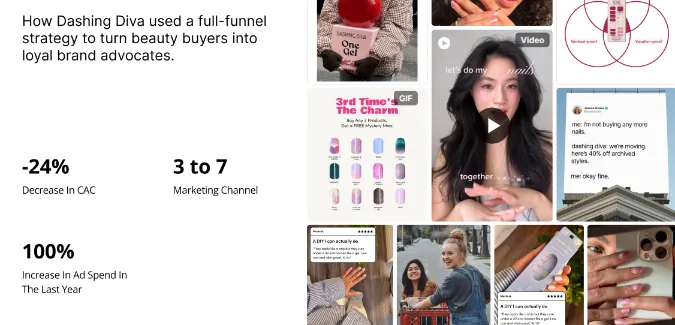
That’s exactly what our client Dashing Diva achieved after partnering with us. Our campaigns turned casual beauty shoppers into loyal repeat buyers while cutting customer acquisition costs by 24%.
2. Retailer Leverage and Margin Compression
Big retailers like Walmart and Kroger hold significant power in the CPG ecosystem. Before they actively support a brand, they expect trade spend in the form of promos, slotting fees, and in-store activations. As a result, brand strategy starts bending around retailer media networks and private labels.
The pressure usually shows up in shrinking gross margins, extended payment terms, and tighter trade conditions, or the risk of losing shelf space altogether.
Digital channels do not always solve this problem. Many CPG brands now allocate large portions of their budgets to retailer platforms such as Amazon Sponsored Search. As those costs increase, acquisition becomes more expensive, and marketing strategies shift toward promotion-heavy tactics that align with retailer calendars.
3. Fragmented Customer Journeys
CPG shoppers move quickly across platforms before making a purchase. They may discover a product on TikTok, read reviews on Amazon, check prices in retailer apps, and then pick it up during a store visit.
The process is fast and unpredictable. Attention spans are short, and low-price products face even more pressure because shoppers rarely spend much time evaluating them.
You need creatives that fit each stage of the journey. Social storytelling helps with discovery. Search-optimized content supports research. And retail media connects the final purchase moment. But stitching those touchpoints together is tough when the data behind them lives in silos.
From what we have seen working with different CPG teams, this is where execution often breaks down. The data behind these touchpoints usually sits in separate systems, which makes it difficult to connect discovery, consideration, and purchase.
How Consumer Brands Win Online
After understanding the structural challenges CPG brands face, the next step is building systems that turn digital demand into real sales. The brands that perform well online follow a few clear principles that connect marketing, retail performance, and data
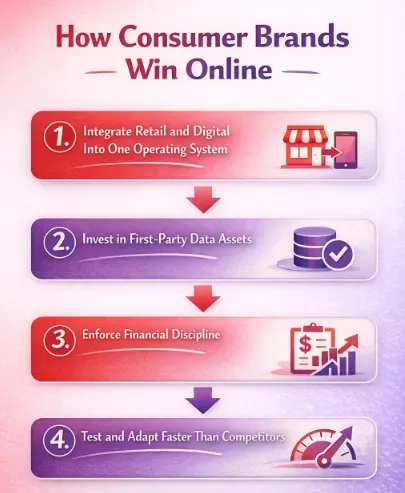
1. Integrate Retail and Digital Into One Operating System
CPG brands are pulling their retail and digital worlds into one tight, streamlined operating system that includes:
- Unified ERPs: One system tracking retail, DTC, and marketplaces, and real‑time syncing with Shopify, EDI retailers, and 3PLs keeps fulfillment rules tight and channel‑specific.
- AI tools like FieldPie sharpen retail execution: Image recognition checks shelves, flags out‑of‑stocks, and verifies planogram compliance, then pushes everything into a shared dashboard your whole team can act on.
- CDPs unify customer data across channels: Online behavior meets in‑store activity in one profile. This helps you power smarter personalization, better promotions, and stronger revenue management.
We have noticed that many organizations struggle here. Retail, ecommerce, and marketing teams typically operate in separate systems. When these systems connect, decision-making becomes faster, and marketing performance improves.
2. Invest in First-Party Data Assets
CPG brands build their own data foundations and turn direct signals into a centralized asset that informs everything from marketing to product strategy. This creates a durable edge by enabling sharper insights, more precise targeting, and a tighter feedback loop.
- Segment based on real behavior: Group customers by actions, preferences, and buying patterns so campaigns feel targeted.
- Centralize the whole system: Use cloud tools like Amazon S3, Redshift, and CDPs, breaking down departmental silos and giving teams a shared view.
- Enrich loyalty and CRM programs: Rewards for sharing purchase habits, deeper profiles, and ML‑powered predictions to understand what customers’ next desires are.
This is where many brands fall behind. They depend too heavily on retailer data and miss the opportunity to build their own customer intelligence.
3. Enforce Financial Discipline
Winning brands build budgets that reflect real-world cash realities, track profitability by channel, and manage inventory and spend with guardrails that prevent cash burn as they scale.
- Budgets built for the real world: Teams factor in retailer payment delays, inventory cycles, and trade deductions. A 13‑week rolling cash forecast keeps inflows and outflows visible so surprises don’t become crises.
- Marketing spend with guardrails: Budgets include contingency buffers, and spend is allocated conservatively until performance proves it deserves more fuel.
- Inventory discipline as a profit lever: Explicit targets (like 60 days on hand) keep working capital healthy and prevent cash from getting trapped in slow‑moving stock.
- Fit‑to‑win rationalization: Cut underperforming SKUs so resources flow to the products that drive growth, often premium lines with stronger margins and repeat rates.
4. Test and Adapt Faster Than Competitors
Many CPG companies work the way modern tech teams do. They use small cross‑functional squads, rapid in‑market experiments, and constant iteration based on real consumer data. They validate concepts in days, shrink time‑to‑market, and outpace slower rivals by prioritizing speed over polish.
One thing we have noticed across many CPG launches is that speed often matters more than perfection. Teams that test ideas quickly learn what resonates with shoppers and adjust their strategy before competitors react.
Example: At‑Shelf Insights (ASIs) place mock products on real store shelves to collect immediate feedback on appeal and positioning. Teams can evaluate packaging, placement, and messaging before a single product unit is produced.
Effective CPG Marketing Strategies
Once you understand the structural challenges CPG brands face, the next step is building marketing systems that convert digital demand into real sales. The strategies below show how successful brands connect discovery, retail performance, and repeat purchases.
1. Retail Media
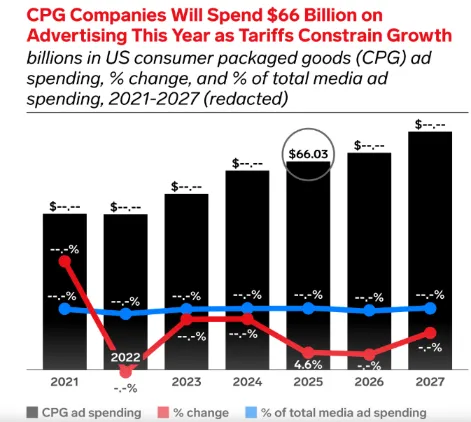
Retail media has evolved from a tactical add-on into a core revenue channel for CPG brands. It allows you to tap directly into retailers’ first-party shopper data, target people already in buying mode, and tie advertising to real sales through closed-loop attribution.
Amazon Ads and Walmart Connect use their own purchase and loyalty data to deliver hyper-targeted campaigns that consistently outperform traditional digital.
In our experience working with CPG teams, retail media quickly becomes one of the most measurable growth channels. Many CPG brands report 17–20% stronger ROAS compared to broad social or TV. This helps explain why 30–50% of digital budgets in some organizations have shifted into retail media.
Retail media also gives you a way to compete directly with private label. On-site promotions, sponsored placements, and search visibility let you defend your share exactly where private labels usually dominate.
2. Omnichannel Strategy
Data shows that over 70% of CPG shoppers now mix online and offline touchpoints. They might discover a product on social, compare prices on a marketplace, and complete the purchase in-store. This behavior instantly expands a brand’s reach beyond the physical shelf and forces channels to work together.
When executed well, this blended model creates clear operational advantages:
- Unified data across channels → sharper personalization and reduced stockouts
- Integrated inventory and AI forecasting → the right products stay in the right locations, improving retention and sell-through.
A marketplace presence on platforms such as Amazon adds scale while strengthening retail partnerships. It creates smoother buying paths that increase basket size and repeat purchases. Trust us, when every touchpoint reinforces the next, friction disappears, and the impact shows up quickly.
For example, Nestlé used digital offers redeemable in Walmart stores to reach 65 million shoppers. The campaign increased online engagement and improved store conversions.
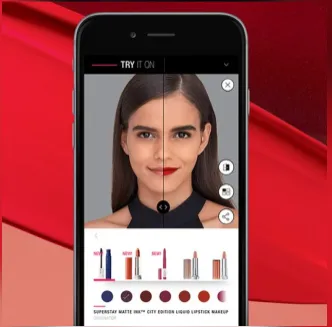
Another famous brand, L'Oréal, uses virtual try-ons to spark digital discovery that sends shoppers directly to retail partners to buy.
3. DTC Infrastructure
Direct-to-consumer infrastructure gives you a powerful growth lever because it creates direct customer relationships, captures first-party data, and delivers higher margins through owned channels like websites and apps.
This model complements retail. It allows you to personalize communication, test offers rapidly, and build loyalty programs such as subscriptions. Together, these factors improve retention, lifetime value, and reduce dependence on third-party platforms.
In our experience, stronger customer data usually becomes the biggest advantage. This explains why 44% of leaders now prioritize AI driven engagement to reduce acquisition costs and support faster innovation.
4. Influencer & Social Commerce
Influencer and social commerce let you borrow real creator trust, especially with younger shoppers, while turning social platforms into places where discovery and purchase happen in the same moment.
With ROI often reaching $4–6 per $1 spent, brands can move at the speed of culture, spark viral lift, and convert through seamless in‑app shopping like TikTok Shop, often at lower CPMs than traditional ads. This usually works well for snacks, beauty, and beverages, where creators tap into cultural moments and produce content that feels human and unpolished.
Why this approach clicks:
- Influencers perform strongly in snacks, beauty, and beverages by aligning with cultural moments and producing user-generated content that feels authentic. Around 74% of consumers trust influencers more than brand ads.
- Social commerce closes the loop with shoppable posts and instant checkout, giving brands real-time data to refine messaging and offers.
For instance, Olipop grew rapidly by working with TikTok micro‑influencers whose recipe and haul videos drove viral demand and contributed to the brand surpassing $200M in revenue.
CeraVe unlocked similar cultural traction through dermatologist‑led content, pushing #CeraVe past 1B views.
KPIs That Define Online Success in CPG
Many CPG teams track dozens of marketing metrics but struggle to identify the ones that actually signal growth. Focusing on the right indicators helps you understand whether your digital investments are producing real demand and sustainable sales.
The table below highlights the core KPIs that most successful CPG brands monitor. These metrics help you evaluate revenue efficiency, customer retention, and the true contribution of each marketing channel.
| KPI Category | Metric | What It Measures | Why It Matters for CPG Brands |
|---|---|---|---|
| Revenue Efficiency | ROAS | Revenue generated per ad dollar | Evaluates media efficiency in low-margin categories |
| Revenue Efficiency | MER | Total revenue ÷ total marketing spend | Indicates overall marketing scalability |
| Revenue Efficiency | Blended CAC | Total acquisition cost across channels | Reflects true customer acquisition cost |
| Revenue Efficiency | Contribution Margin | Profit after variable costs | Protects against unprofitable scaling |
| Retention & Velocity | Repeat Purchase Rate | % of customers who buy again | Signals brand loyalty and product-market fit |
| Retention & Velocity | Subscription Retention | Ongoing auto-ship continuation rate | Indicates recurring revenue stability |
| Retention & Velocity | Sales Velocity | Units sold per store or per time period | Impacts retail shelf sustainability |
| Incrementality | Lift Studies | Measured revenue increase from campaigns | Validates marketing impact beyond correlation |
| Incrementality | Channel Contribution Modeling | Revenue allocation across channels | Clarifies where growth actually comes from |
| Incrementality | Branded Search Growth | Increase in brand-specific searches | Signals rising brand demand |
Build a High-Performing CPG Digital Marketing System with 9AM
If you want to truly nail your digital marketing strategy, you need to focus on clear goals, tight feedback loops, and creative engineered to scale. Most CPG teams are stuck with scattered data, inconsistent messaging, and campaigns that don’t compound.
That is exactly where 9AM supports your team. We help you build a reliable creative engine and align retail media, paid social, marketplaces, and DTC into a single growth system.
Book a strategy call with us and let’s turn your CPG brand turn into a clean, repeatable growth engine.
FAQs
What is a strong ROAS benchmark in CPG?
CPG ROAS varies by category, price point, and channel, but strong performance typically falls between 2–4X on paid social and 3–6X on retail media or Amazon. Because margins are tighter in CPG, the real benchmark is profitable contribution after ad spend, ensuring campaigns drive incremental, not just attributed, revenue.
How does CPG marketing differ from DTC marketing?
CPG marketing focuses on driving demand across retail, Amazon, and wholesale, where brands don’t fully control the customer relationship. Success depends on retail media, in‑store visibility, and broad reach. DTC marketing is more direct, data-rich, and conversion‑focused, with full control over attribution, creative testing, and customer retention.
Why is retail media essential for CPG growth?
Retail media reaches shoppers at the exact moment they’re ready to buy, increasing visibility and velocity across Amazon, Walmart, Target, and grocery chains. It improves shelf performance, protects share against competitors, and provides closed‑loop data that traditional advertising can’t match, making it a core growth lever for modern CPG brands.
What role does creative testing play in CPG performance?
Creative testing reveals which messages, visuals, and claims actually drive purchase intent across crowded retail and digital environments. It helps you find winning angles, fight ad fatigue, and scale spend efficiently. Fast iteration creates a library of proven assets that stabilize CPAs and improve performance across paid social, retail media, and Amazon.
How does 9AM help CPG companies with digital marketing strategies?
9AM builds high‑performing digital systems for CPG brands by cleaning up data, sharpening messaging, and creating a testing engine that scales across paid social, retail media, Amazon, and DTC. We align channels, optimize creative, and install a repeatable growth rhythm that drives velocity, lowers acquisition costs, and strengthens brand demand.
Does 9AM have experience with DTC, influencer, and social commerce?
Yes, 9AM works across DTC, influencer, and social commerce ecosystems. We develop conversion‑ready DTC funnels, run creator‑led campaigns that drive authentic demand, and optimize platforms like TikTok Shop for seamless in‑app sales. Our approach combines performance data, creative testing, and channel strategy to turn social attention into measurable revenue.
Appendix ▼
- https://www.rmiq.net/walmart/retail-media-guide/
- https://www.dbbnwa.com/articles/ascendance-of-private-label-brands-trends-drivers-and-impacts/
- https://www.mckinsey.com/industries/retail/our-insights/a-turning-point-for-private-brands-how-retailers-can-seize-the-opportunity
- https://www.foodbev.com/2024-state-of-the-cpg-industry-annual-report/
- https://www.inc.com/jonathan-tofel/3-powerful-in-market-methods-for-testing-cpg-products/91191081
- https://ebiquity.com/case-studies/unlocking-incremental-retail-media-value-for-a-leading-cpg-brand/
- https://www.mckinsey.com/capabilities/growth-marketing-and-sales/solutions/periscope/our-insights/surveys/cpg-goes-omnichannel-shoppers-grasp-the-digital-opportunity
- https://emarsys.com/learn/blog/cpg-dtc-data-personalization-and-omnichannel-strategie/
- https://landingi.com/digital-advertising/good-roas/
- https://www.trendtrack.io/blog-post/what-is-a-good-roas-for-ecommerce
- https://www.snipp.com/blog/building-a-digital-coupon-strategy
- https://www.snipp.com/client/digital-barcode-offers-to-drive-sales-and-basket-size-for-nestle?hsLang=en-en
- https://landingi.com/digital-advertising/good-roas/
- https://www.trendtrack.io/blog-post/what-is-a-good-roas-for-ecommerce
- https://taptwicedigital.com/stats/olipop